
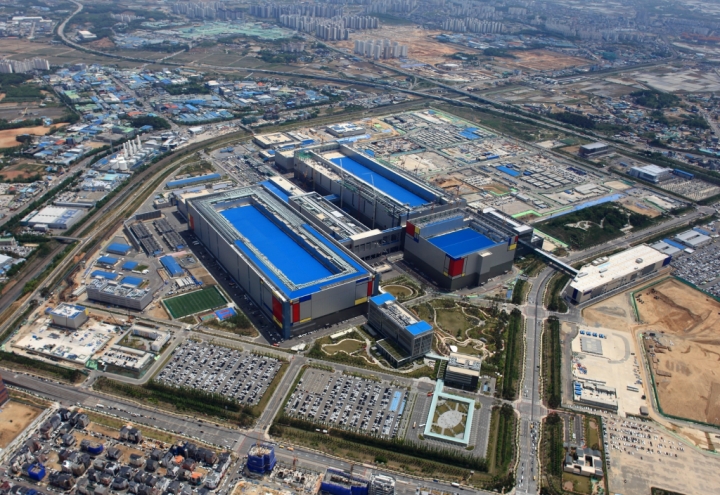
In a landmark moment for the American semiconductor industry, Taiwan Semiconductor Manufacturing Company (TSMC) and NVIDIA jointly announced the successful production of the first NVIDIA Blackwell GPU wafer manufactured on U.S. soil, at TSMC's Fab 21 in Phoenix, Arizona. The milestone underscores a pivotal shift in global semiconductor manufacturing geography and caps a remarkable year for TSMC, which closed 2025 with a 30% jump in annual revenue and a commanding 72% share of the global AI chip fabrication market.
Record-Breaking Financial Performance and Market Leadership
TSMC's 2025 financial results exceeded analyst expectations by a wide margin. The company reported full-year revenue growth of approximately 30% year-over-year, driven primarily by surging demand for advanced AI accelerators and high-performance computing chips. The foundry's AI chip fabrication market share reached 72%, cementing its position as the indispensable backbone of the global AI hardware ecosystem. Key customers including NVIDIA, AMD, Apple, and Qualcomm all deepened their reliance on TSMC's cutting-edge nodes, particularly the N3 and N2 process generations. TSMC's gross margin for the year improved to approximately 56%, reflecting the premium pricing power that comes with leading-edge process technology and near-monopoly status in the most advanced chip fabrication tiers.
The Blackwell Milestone and U.S. Manufacturing Expansion
The production of the first Blackwell wafer at TSMC's Arizona facility represents far more than a symbolic achievement. NVIDIA's Blackwell architecture, which powers the GB200 and B100 series AI accelerators, demands the most advanced manufacturing processes available. The fact that these chips are now being produced on American soil marks a significant victory for U.S. industrial policy and the CHIPS and Science Act incentive framework. TSMC's Phoenix facility, which began volume production on N4 processes in 2024, has now advanced to producing Blackwell-class chips, validating the multi-billion-dollar investment in domestic advanced semiconductor manufacturing. TSMC has committed to investing over $65 billion in U.S. manufacturing capacity through 2030, with plans for additional fabrication plants capable of producing on 2nm and next-generation process nodes.
- TSMC Arizona Fab 21 now producing NVIDIA Blackwell wafers on advanced process nodes
- U.S.-based production reduces geopolitical supply chain risk for American AI infrastructure
- TSMC plans additional Arizona fabs targeting 2nm production by late 2020s
- The milestone fulfills a key objective of the U.S. CHIPS and Science Act framework
Industry Implications and the AI Demand Surge
The appetite for AI compute infrastructure shows no signs of slowing. Data center operators including Microsoft, Google, Amazon, and Meta have all dramatically expanded their capital expenditure plans for AI accelerator procurement, with aggregate AI infrastructure spending projected to exceed $300 billion globally in 2026. NVIDIA's Blackwell platform, which delivers up to four times the training performance of its predecessor Hopper architecture, has become the primary driver of TSMC's advanced node utilization. The concentration of AI chip production at TSMC has also created significant pressure on advanced packaging capacity, with CoWoS (Chip-on-Wafer-on-Substrate) packaging for HBM memory integration remaining a critical bottleneck across the supply chain.
For semiconductor materials companies operating in the advanced manufacturing supply chain, the continued expansion of TSMC's production capacity — both globally and within the United States — represents substantial and sustained demand growth. Specialty chemicals, high-purity process gases, photoresists, CMP slurries, and advanced dielectric materials are all consumed in greater quantities as chip complexity increases and wafer volumes grow. Companies like Full Chain Materials, which supply critical materials and equipment to semiconductor fabs, are positioned to benefit directly from TSMC's accelerating production ramp, particularly as the Arizona facility scales toward full capacity and next-generation process nodes come online. The localization of advanced chip manufacturing in the U.S. also creates new regional supply chain opportunities, as fabs seek to qualify domestic materials suppliers to reduce logistics risk and comply with CHIPS Act sourcing requirements.
